
Scopevisio
Scope
- Senior Product Designer & Design Engineer: UX/UI
- design system
- token architecture
- design team lead
Duration
Since 2018
Tools
Figma, Tokens Studio, FigJam, Miro
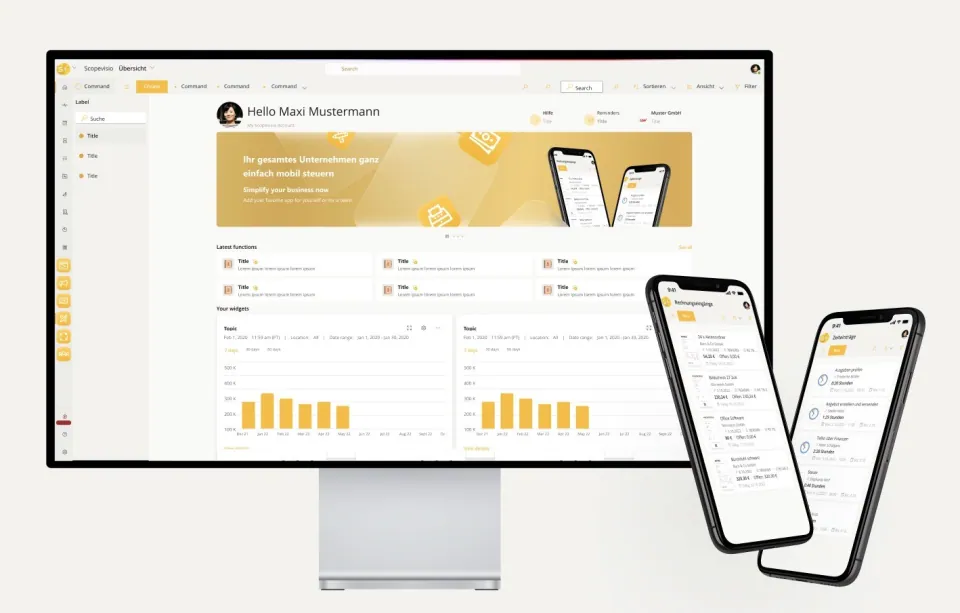
An ERP product line that makes experts faster instead of slowing them down: one design system for desktop, mobile and add-ons.
Scopevisio is cloud business software for the core processes of medium-sized companies – from incoming invoices and travel expenses to merchandise management, HR, documents and reporting.
Since 2018 I have been responsible for the redesign and re-conception of the entire product line: design system from scratch, UI, (micro-)interactions, user guidance, service design language and brand elements.
Goal
Business and user goals – and my contribution to defining them.
- Business
- A grown product line should appear as one consistent product – maintainable, without every team reinventing the basics.
- User
- Specialists working with large amounts of data complete tasks faster with fewer errors and find their way around every module right away.
Problem
The data, insights and pain points the solution builds on.
An audit of the legacy systems showed many data types, roles and processes, but no shared design foundation.
- The same tasks were handled differently per module.
- Forms, tables and dashboards were dense but hard to scan.
- Desktop, mobile and add-ons followed their own patterns.
Solution
Approach, UX patterns, screens and design process.
Approach & UX patterns
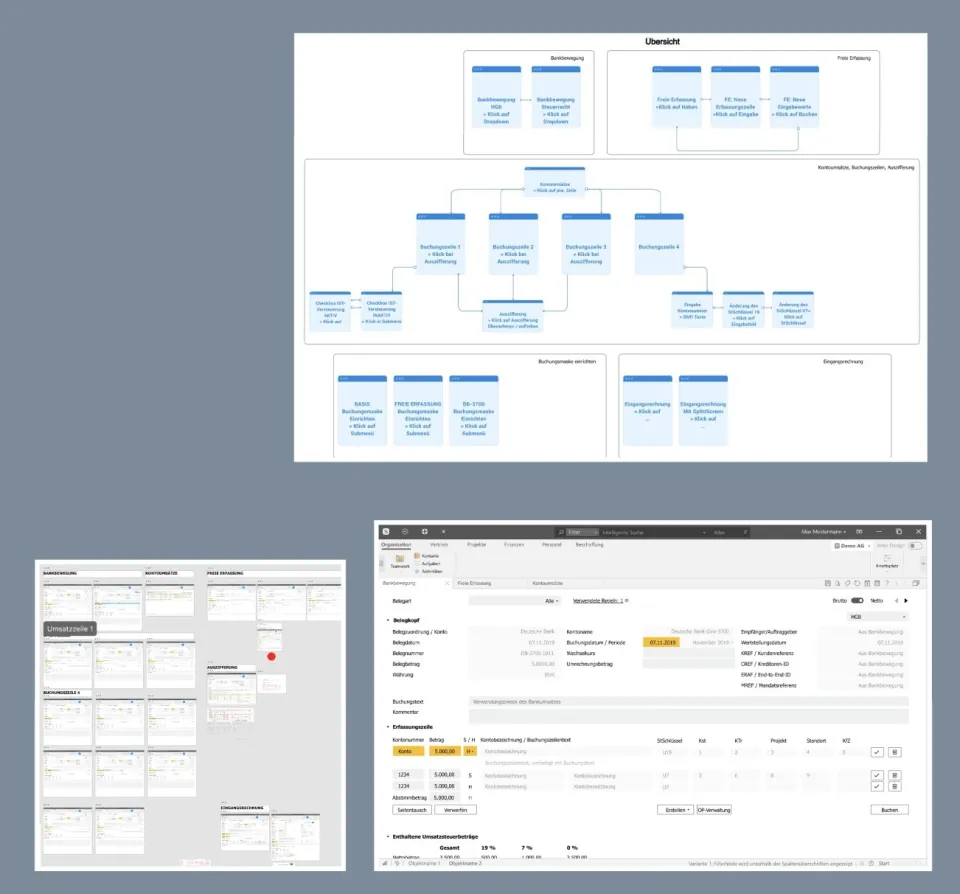
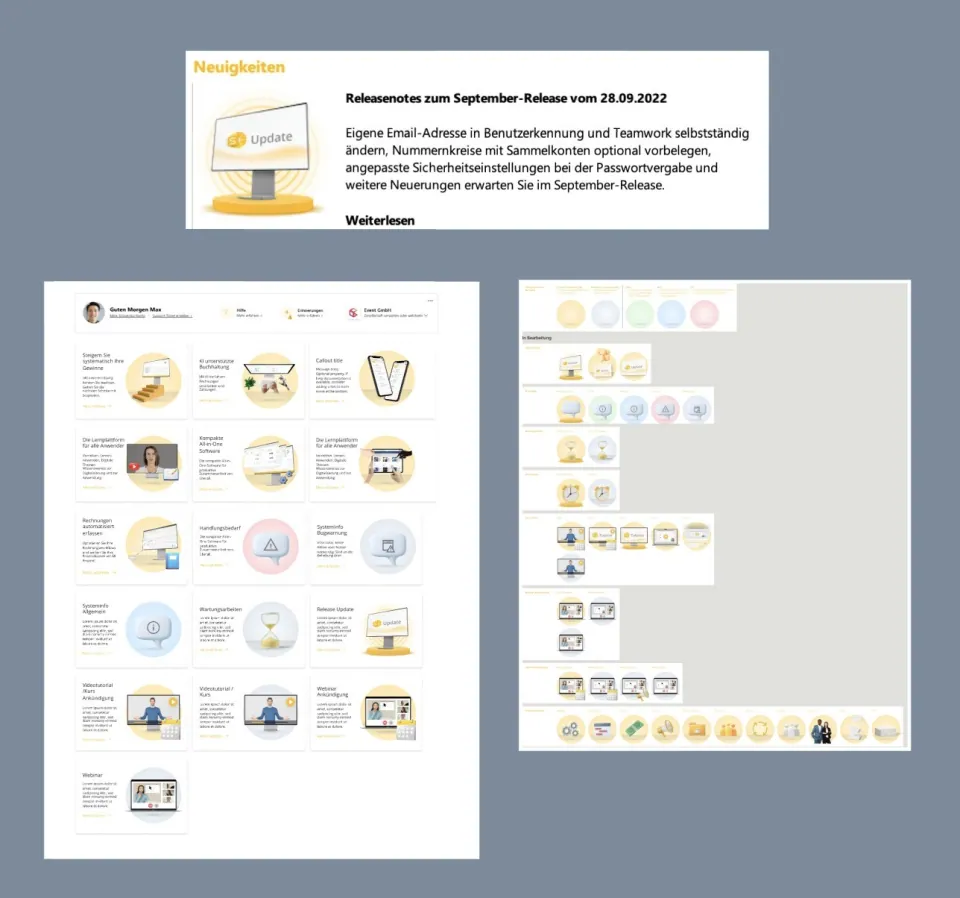
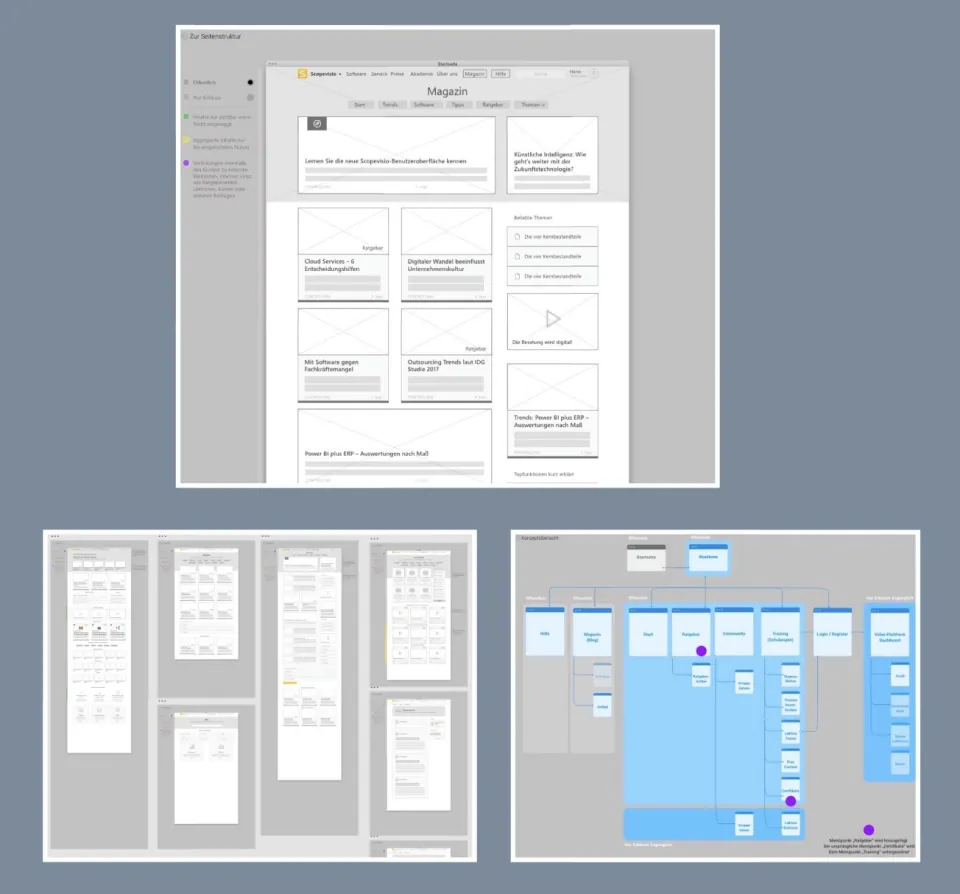
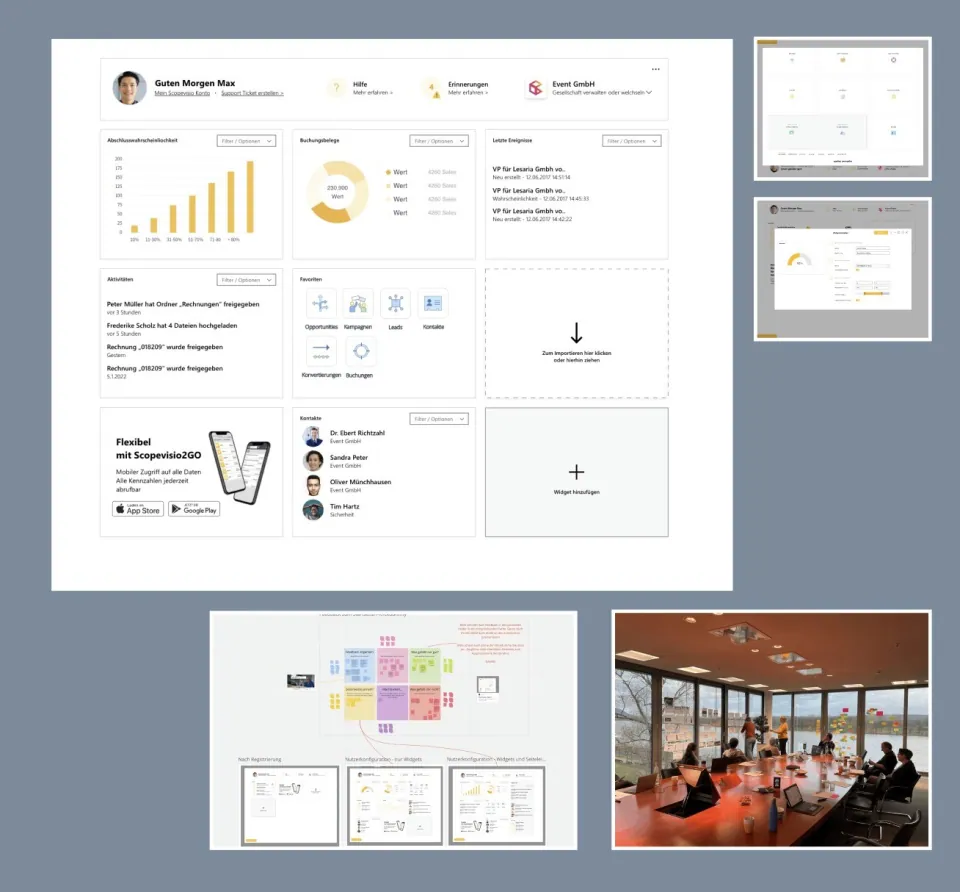
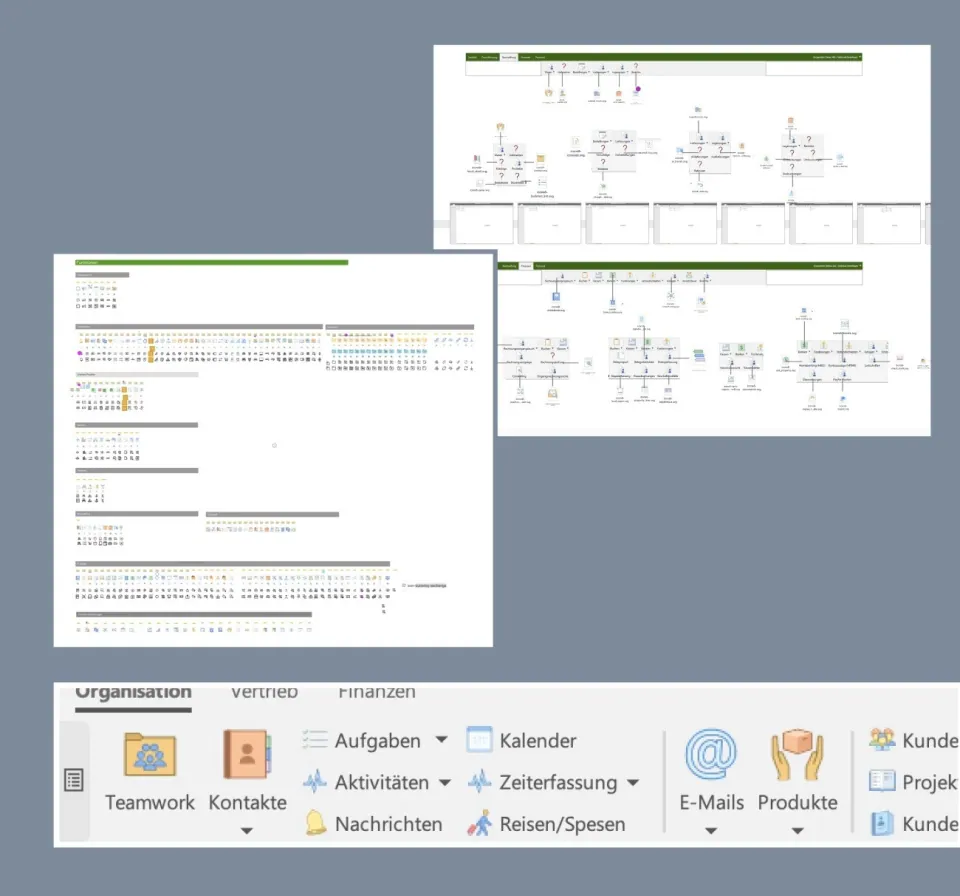
I treated the product line as a system: one information architecture for all modules, reusable patterns for lists, detail views, forms and dashboards, and design tokens that are identical in Figma and in code.
Screens, UI flow & process
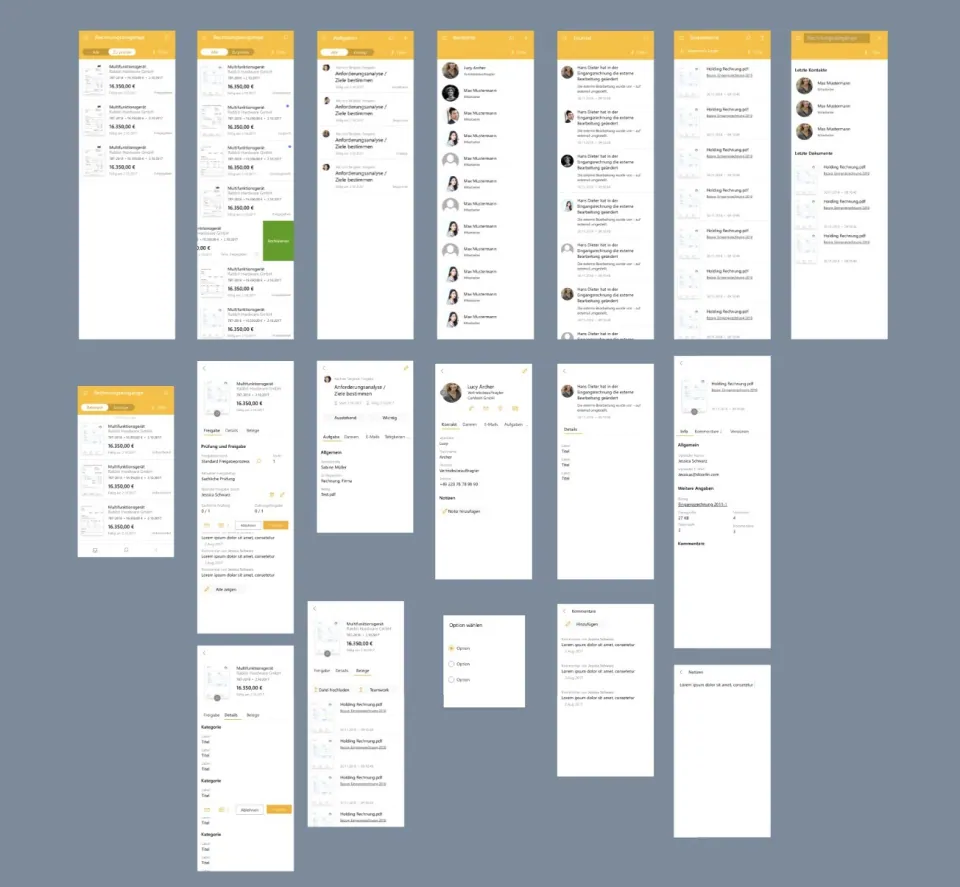
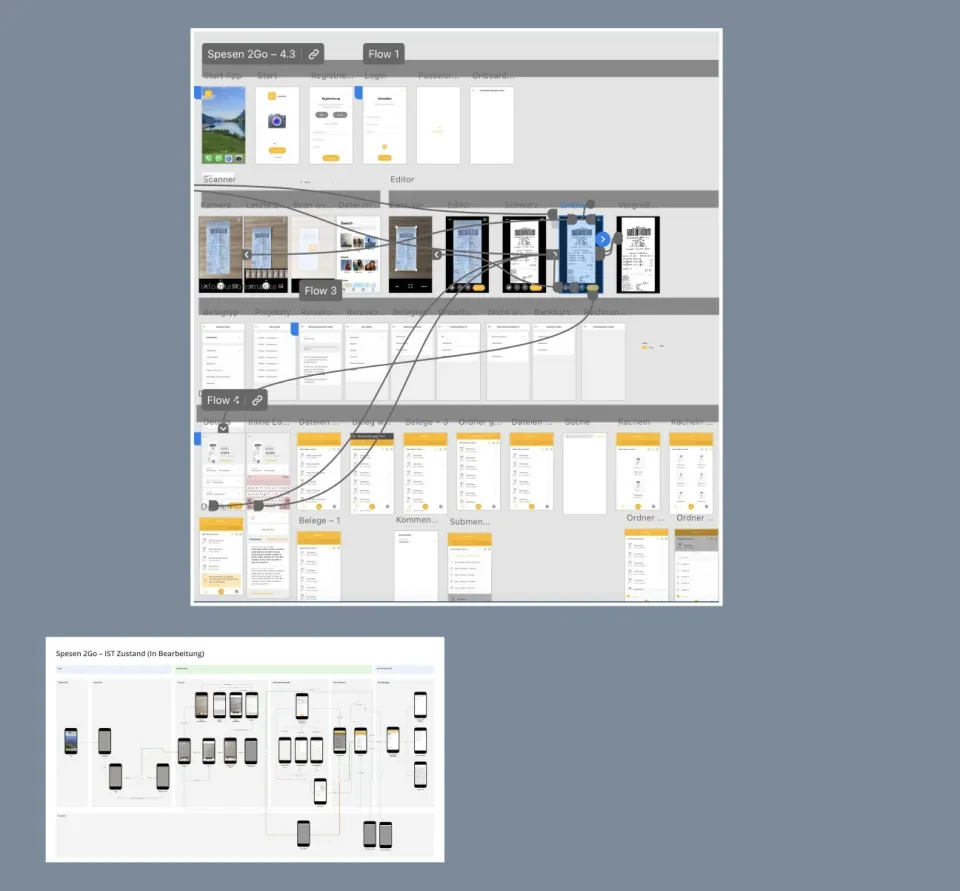
From low-fi wireflows through detailed boards to documented components and patterns that development adopts directly. Every screen follows the same rules: content over decoration, clear hierarchy in dense data.
Impact & Validation
Outcome and validation.
- Outcome
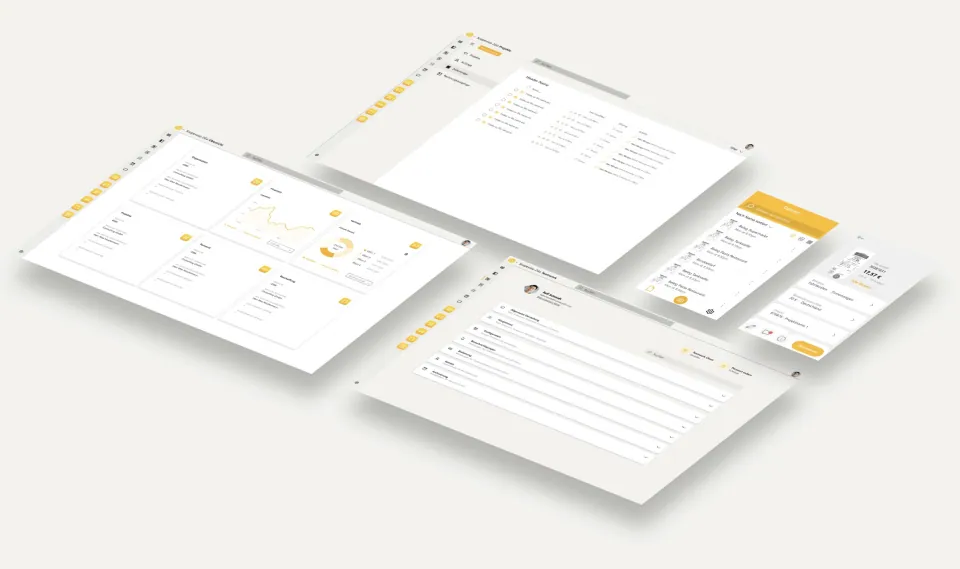
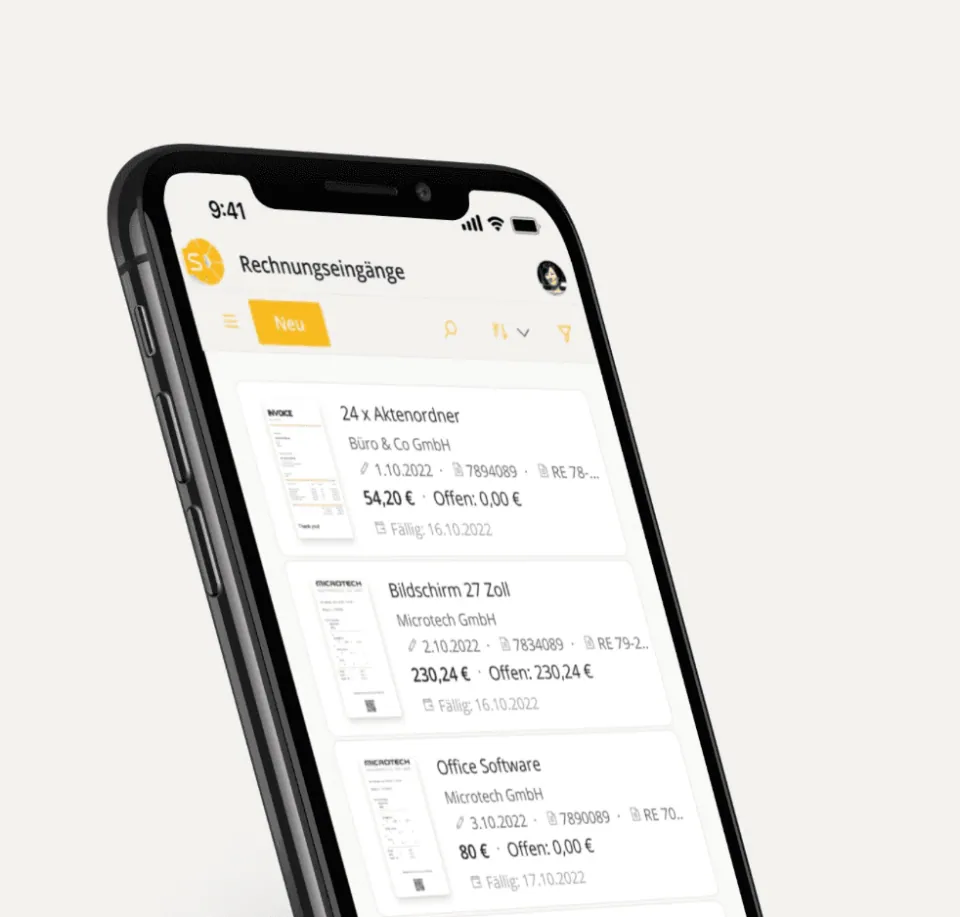
- A shared design system connects design and code through tokens; desktop, mobile and add-ons share one interface concept, new modules reuse the same building blocks.
- Validation (planned)
- Measuring processing time and error rate in core workflows, user tests of new patterns before rollout.